
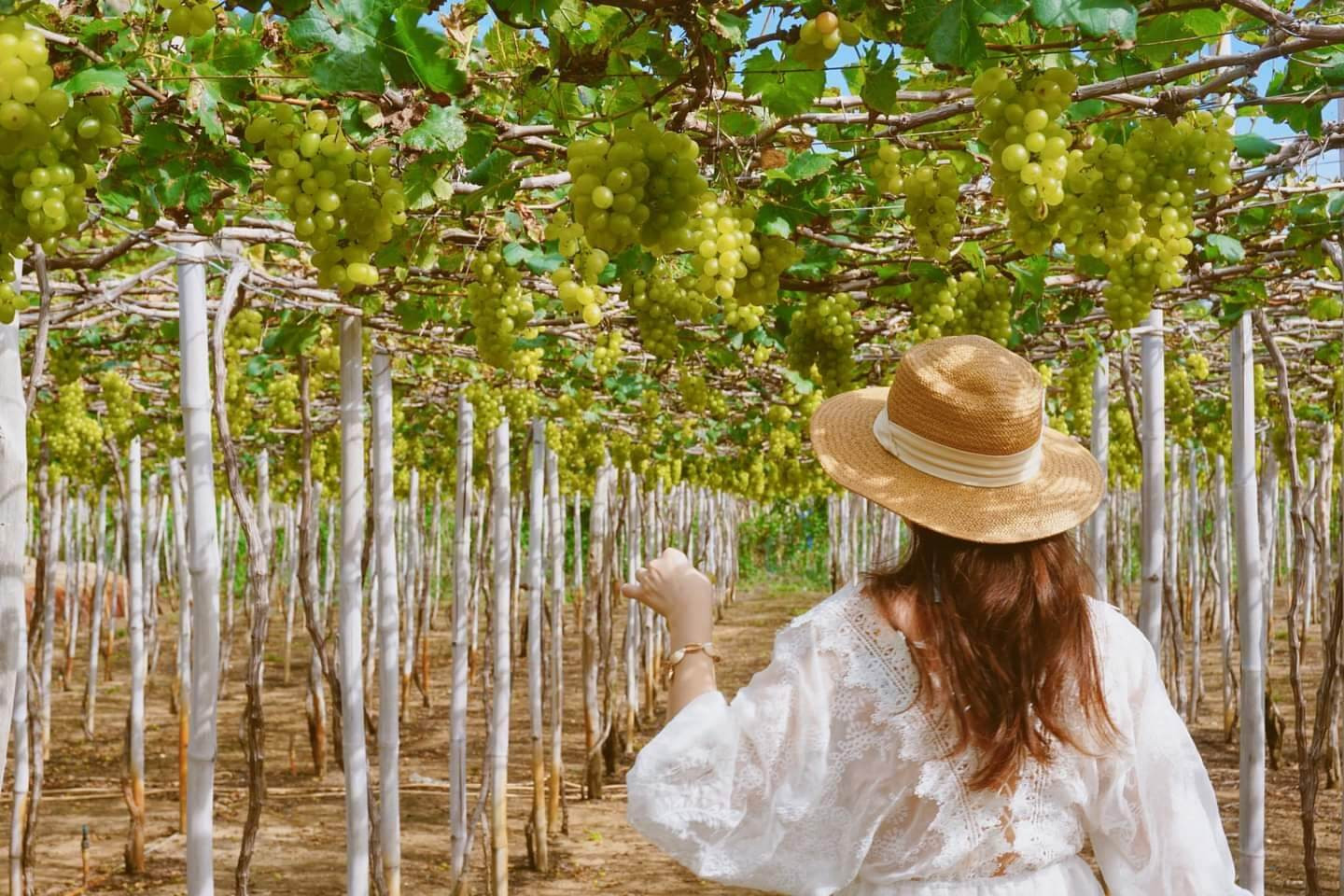
The grapes are small, seeded and thick-skinned, and that is not a defect. Table grapes from southern Khanh Hoa are a local variety bred for heat rather than for the seedless supermarket trade, and they taste sharper and more aromatic than the imported fruit most buyers compare them to. Alongside them the region grows a small green apple and processes both into syrup, wine and dried fruit. So what should you buy?
This is the only province in Vietnam growing table grapes at any commercial scale, which is the reason the crop is worth a paragraph at all.
The grapes
Bunches are compact and the berries are small, round and firm, in red-purple or pale green depending on variety. They have seeds and the skin is thick.
The flavour is more acidic and more perfumed than imported seedless grapes. People expecting the supermarket version are sometimes disappointed and that is a mismatch of expectation rather than quality.
Buy at a vineyard gate rather than a roadside stall where possible. The price is similar and you can see what you are buying off the vine.
Several harvests a year mean fruit is available across much of the calendar, unlike most Vietnamese fruit which has one short season.
The apples
The local apple is small, green and crisp, closer to a jujube than to a European apple, and it is eaten fresh with salt and chilli or dried.
It travels better than the grapes and is the more practical fresh purchase if you have a long journey ahead.
Dried grapes and dried apples are sold in every shop in the town and are the cheapest way to take the crop home.
Grape syrup and wine
Syrup is boiled down from the juice and sold in bottles, used diluted as a drink or over ice. It is the most transportable form of the crop and it keeps for months.
Wine is made here too and is honest rather than distinguished. Nobody in the region oversells it and neither will we.
Buy a small bottle of syrup rather than a large one. It is concentrated and a little makes a lot of drink at home.
What we will not claim
Grape syrup and grape seed products are marketed locally with various health benefits attached. Era Tourist does not make health claims about them.
Buy them because they taste good and because they come from the one place in Vietnam that grows the fruit, not because of anything they are said to do.
Check the import rules for fresh produce at your destination before packing fruit, since many countries restrict it entirely.
Carrying it home
Syrup and dried fruit travel perfectly. Fresh grapes bruise, ferment in a warm bag and are restricted by many countries as fresh produce.
If it is going into a suitcase, buy the syrup. If you are eating it this week, buy the fruit at the vineyard.
Ask to taste before buying a quantity. Growers expect it and one grape settles the question faster than any description.
Where to buy
The vineyards along the coast road sell direct — see the Thai An vineyards. The craft villages nearby are the other thing worth carrying home; see Bau Truc pottery and My Nghiep weaving. Eat in the town first; see our shortlist of restaurants. Era Tourist buys at a family vineyard on the drive rather than at a shop in town.
Trái nho nhỏ, có hạt và vỏ dày, và đó không phải khuyết điểm. Nho ăn tươi ở nam Khánh Hòa là giống bản địa chọn tạo cho khí hậu nóng chứ không phải cho thị trường nho không hạt trong siêu thị, và nó có vị gắt hơn cùng mùi thơm rõ hơn thứ nho nhập mà phần lớn người mua đem ra so. Bên cạnh nho, vùng này trồng một giống táo xanh nhỏ và chế biến cả hai thành mật, rượu và mứt sấy. Vậy nên mua gì?
Đây là tỉnh duy nhất ở Việt Nam trồng nho ăn tươi ở quy mô thương mại, và đó là lý do vụ mùa này đáng được viết tới.
Trái nho
Chùm nho chặt và quả nhỏ, tròn, chắc, màu tím đỏ hoặc xanh nhạt tùy giống. Nho có hạt và vỏ thì dày.
Vị chua hơn và thơm hơn nho không hạt nhập khẩu. Người trông đợi bản siêu thị đôi khi thất vọng, và đó là chuyện lệch kỳ vọng chứ không phải chuyện chất lượng.
Hãy mua ngay tại cổng vườn thay vì mua ở sạp ven đường khi có thể. Giá tương đương mà bạn nhìn thấy được thứ mình mua ngay trên giàn.
Mỗi năm vài vụ nghĩa là gần như quanh năm đều có trái, khác với phần lớn trái cây Việt Nam vốn chỉ có một mùa ngắn.
Trái táo
Táo bản địa nhỏ, xanh và giòn, gần với trái táo ta hơn là trái táo tây, ăn tươi chấm muối ớt hoặc sấy khô.
Táo đi đường tốt hơn nho và là lựa chọn trái tươi thực tế hơn nếu bạn còn quãng đường dài phía trước.
Nho sấy và táo sấy bán ở mọi cửa hàng trong thị xã và là cách rẻ nhất để mang vụ mùa này về nhà.
Mật nho và rượu vang
Mật được cô lại từ nước nho và bán theo chai, pha loãng làm nước uống hoặc rót lên đá. Đây là dạng dễ mang đi nhất của vụ mùa và để được hàng tháng.
Ở đây cũng làm rượu vang, và nó thành thật chứ không xuất sắc. Chẳng ai trong vùng thổi phồng nó và chúng tôi cũng vậy
Hãy mua một chai mật nhỏ thay vì chai lớn. Mật cô đặc và một chút pha ra được rất nhiều nước uống ở nhà.
Điều chúng tôi sẽ không khẳng định
Mật nho và các sản phẩm từ hạt nho được quảng cáo tại chỗ kèm nhiều công dụng sức khỏe. Era Tourist không đưa ra tuyên bố nào về chúng.
Hãy mua vì chúng ngon và vì chúng đến từ nơi duy nhất ở Việt Nam trồng được thứ trái ấy, đừng mua vì bất cứ điều gì người ta nói chúng làm được.
Hãy kiểm tra quy định nhập cảnh về nông sản tươi ở nơi bạn đến trước khi xếp trái cây, vì nhiều nước cấm hoàn toàn.
Mang về nhà
Mật và mứt sấy đi đường hoàn hảo. Nho tươi thì dập, lên men trong một cái túi ấm và bị nhiều nước hạn chế với tư cách nông sản tươi.
Nếu nó phải nằm trong vali thì hãy mua mật. Còn nếu bạn ăn ngay trong tuần thì mua trái tại vườn.
Hãy xin nếm trước khi mua nhiều. Nhà vườn vẫn quen chuyện đó và một trái nho giải quyết câu hỏi nhanh hơn mọi lời mô tả.
Mua ở đâu
Các vườn nho dọc đường ven biển bán trực tiếp — xem vườn nho Thái An. Các làng nghề gần đó là thứ còn lại đáng mang về; xem gốm Bàu Trúc và dệt Mỹ Nghiệp. Ăn trong thị xã trước; xem tuyển chọn quán ăn. Era Tourist mua ở vườn của một hộ gia đình trên đường đi chứ không mua ở cửa hàng trong thị xã.