
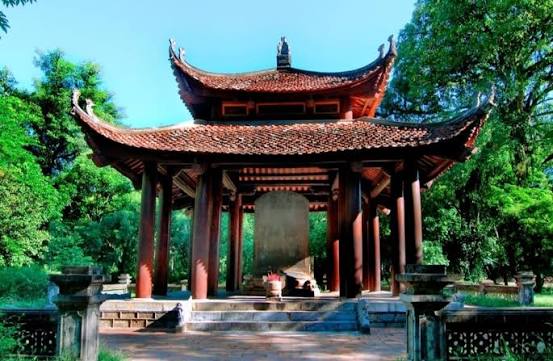
A man from this village drove a Chinese occupation out of Vietnam and founded a dynasty that lasted, in one form or another, for three and a half centuries. Lam Kinh in Thanh Hoa is where his family came from and where the dynasty buried its emperors, and it is a forest of tombs, stelae and reconstructed halls rather than a citadel. It is the quietest major historical site in the province. So what is here?
The resistance he led lasted a decade and began with a handful of men in these hills, which is why the site carries the weight it does rather than because of its architecture.
Why this place
The founder was a landowner from this district who raised a ten-year resistance from these hills. After victory he took the throne, and the dynasty treated his home village as its sacred ancestral seat rather than as a capital.
Government stayed in the delta. Lam Kinh was for ceremony, for burial and for remembering where the family started.
The founder is among the most revered figures in Vietnamese history, and the story of the sword he was said to have received and returned is known to every schoolchild.
The tombs are deliberately modest. The dynasty chose restraint at its ancestral seat even while building elaborately elsewhere, and that contrast is worth noticing.
The tombs and stelae
Several imperial tombs lie in the grounds, each modest by the standards of later dynasties: a low mound, stone attendants and animals, and a stele recording the reign.
The stelae are the substance of the site. One of them is among the most important epigraphic monuments in the country, and the carving on its base is worth close attention.
A festival is held here each year on the anniversary of his death, and the site is at its busiest then.
A stream runs through the grounds with an old stone bridge over it, and the layout of tombs and halls follows the water rather than a grid.
What has been rebuilt
The main halls were reconstructed in recent decades on the original foundations, in timber and tile. They are new buildings on old ground and the site does not pretend otherwise.
Excavated foundations are visible in places, which is more informative than the reconstructions and much less visited.
Compared with the stone citadel nearby this site is gentle and green, which is why doing both in one day works so well.
The forest
Old trees cover much of the site and several are individually named and revered, with stories attached that guides tell readily.
The trees are half the reason to come. Walking between the tombs under canopy is a completely different experience from crossing the exposed stone of the other great site nearby.
Allow for walking. The tombs are spread through the grounds and reaching all of them means a couple of kilometres on foot.
Interpretation in English is limited here as at most sites in the province. Reading a page on the dynasty beforehand makes a substantial difference.
How to visit
This is an ancestral shrine as much as a monument and Vietnamese visitors offer incense at the tombs. Dress modestly and keep quiet in the halls.
Allow two hours and take a guide if one is available; without explanation the layout is difficult to read.
Where it fits in the province
Pair it with Ho Citadel, built by the dynasty that immediately preceded this one, and the two together explain most of the province's place in Vietnamese history. The district also makes the province's classic sweet — see banh gai Tu Tru. Travellers continuing west reach Pu Luong Nature Reserve, and back in the capital see our shortlist of specialty restaurants. Era Tourist schedules Lam Kinh in the afternoon, under the trees.
Một người con của vùng đất này đã đánh đuổi quân xâm lược phương Bắc khỏi Việt Nam và lập nên một triều đại kéo dài, dưới hình thức này hay hình thức khác, suốt ba thế kỷ rưỡi. Lam Kinh ở Thanh Hóa là nơi dòng họ ông xuất thân và là nơi triều đại ấy an táng các vua, và đó là một khu rừng của lăng mộ, bia đá và điện miếu phục dựng chứ không phải một tòa thành. Đây là di tích lịch sử lớn yên tĩnh nhất tỉnh. Vậy ở đó có gì?
Cuộc khởi nghĩa ông dẫn dắt kéo dài mười năm và bắt đầu với dăm ba người trên chính những quả đồi này, và đó mới là lý do nơi đây có sức nặng, chứ không phải vì kiến trúc.
Vì sao lại là nơi này
Người khởi nghiệp là một hào trưởng của huyện này, dấy nghĩa mười năm từ chính những quả đồi ấy. Sau chiến thắng ông lên ngôi, và triều đại xem làng quê ông là đất tổ thiêng liêng chứ không phải kinh đô.
Việc triều chính vẫn ở châu thổ. Lam Kinh dành cho tế lễ, cho an táng, và cho việc nhớ nơi dòng họ khởi đầu.
Người khởi nghiệp thuộc hàng những nhân vật được kính trọng nhất trong lịch sử Việt Nam, và câu chuyện thanh gươm ông được trao rồi trả lại thì học sinh nào cũng biết.
Các lăng cố ý khiêm nhường. Triều đại chọn sự tiết chế ở đất tổ ngay cả khi xây cất cầu kỳ ở nơi khác, và sự tương phản đó rất đáng để ý.
Lăng mộ và bia đá
Trong khuôn viên có nhiều lăng vua, mỗi lăng đều khiêm nhường nếu so với các triều đại sau: một nấm đất thấp, tượng quan hầu và tượng thú bằng đá, cùng tấm bia ghi lại một triều vua.
Bia đá mới là phần cốt lõi của di tích. Một trong số đó thuộc hàng những bi ký quan trọng nhất nước, và phần chạm trên bệ bia rất đáng nhìn kỹ.
Hằng năm nơi đây tổ chức lễ hội vào dịp giỗ ông, và đó là lúc khu di tích đông nhất.
Một dòng suối chảy qua khuôn viên với cây cầu đá cổ bắc ngang, và cách bố trí lăng tẩm, điện miếu men theo dòng nước chứ không theo ô bàn cờ.
Phần đã dựng lại
Các tòa điện chính được phục dựng trong vài chục năm gần đây trên nền móng gốc, bằng gỗ và ngói. Đó là công trình mới trên nền đất cũ, và di tích cũng không giấu điều đó.
Nhiều chỗ để lộ nền móng khai quật, và phần này nói lên nhiều hơn các công trình phục dựng lại ít người ghé hơn hẳn
So với tòa thành đá gần đó, nơi này dịu và xanh, và đó là lý do đi cả hai trong một ngày lại rất hợp.
Rừng cây
Cây cổ thụ phủ phần lớn khu di tích và vài cây được đặt tên riêng, được thờ, kèm những câu chuyện mà hướng dẫn viên sẵn lòng kể.
Rừng cây là một nửa lý do để tới. Đi giữa các lăng mộ dưới tán lá là trải nghiệm hoàn toàn khác với việc băng qua nền đá phơi nắng ở di tích lớn gần đó.
Hãy tính cả quãng đi bộ. Các lăng nằm rải trong khuôn viên và đi hết là mất vài cây số chân đất.
Phần thuyết minh tiếng Anh ở đây hạn chế như ở phần lớn di tích trong tỉnh. Đọc trước một trang về triều đại này tạo ra khác biệt đáng kể.
Thăm viếng thế nào
Đây vừa là di tích vừa là nơi thờ tổ, và khách Việt vẫn dâng hương ở các lăng. Hãy ăn mặc kín đáo và giữ yên lặng trong điện.
Hãy dành hai tiếng và thuê hướng dẫn nếu có; không có người giải thích thì bố cục khu di tích rất khó đọc.
Chỗ của nó trong tỉnh
Hãy ghép với thành nhà Hồ do triều đại ngay trước đó dựng lên, và hai nơi cộng lại giải thích gần trọn vị trí của tỉnh này trong lịch sử Việt Nam. Huyện này cũng làm ra thứ bánh kinh điển của tỉnh — xem bánh gai Tứ Trụ. Ai đi tiếp về phía tây thì tới khu bảo tồn Pù Luông, còn về lại tỉnh lỵ thì xem tuyển chọn quán đặc sản. Era Tourist xếp Lam Kinh vào buổi chiều, dưới tán cây.