
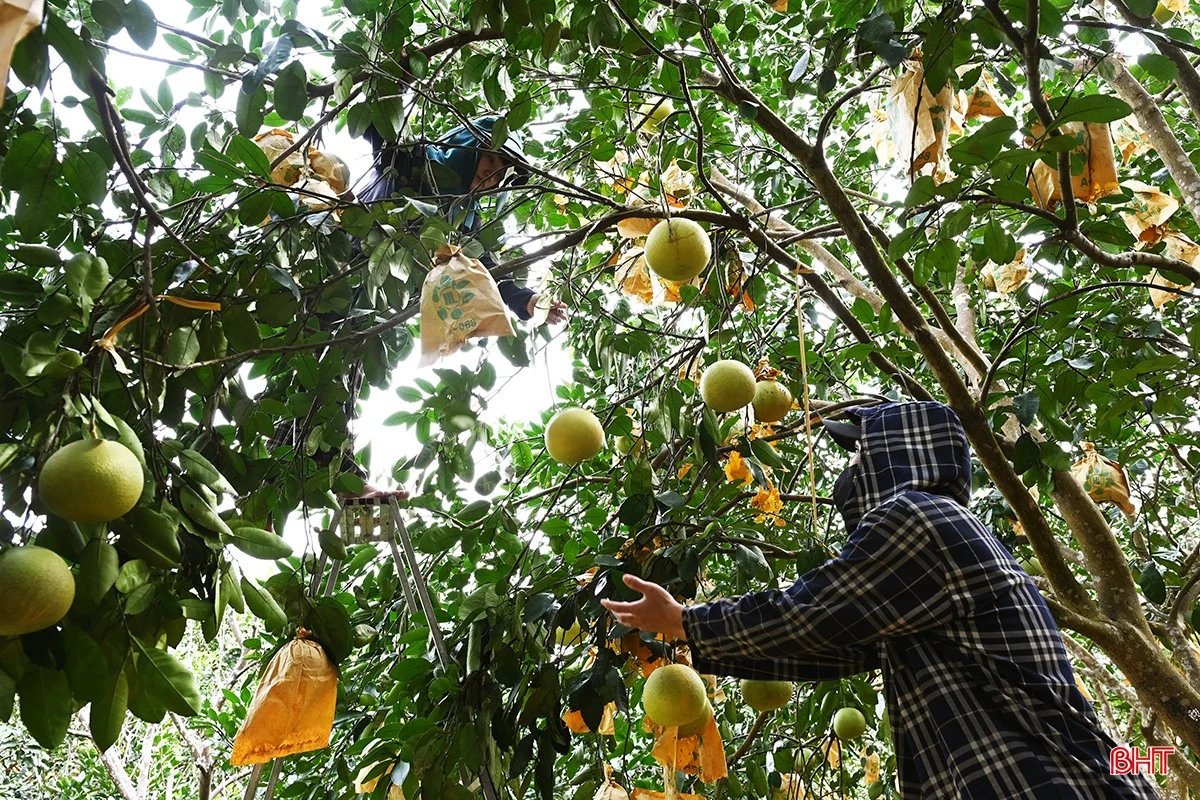
It is not a sweet fruit and it is not meant to be. Phuc Trach pomelo grows in one upland commune in Ha Tinh and is valued for a balance of sweetness and acidity that most commercial pomelos have bred out. The growing area is small, the season is short, and the name is used far more widely than the fruit is grown. So how do you buy the real thing?
Flowering and fruit set are both sensitive to weather here, and growers hand-pollinate in some seasons to protect the yield.
Where it grows
The variety is tied to a specific upland district in the west of the province, on soil and at an altitude that growers say cannot be replicated elsewhere.
It carries a protected geographical indication, which means the name is legally tied to that area. Enforcement is another matter.
Growers describe it as neither sweet nor sour but somewhere between, and that balance is the whole point of the variety.
What it should look like
Medium size rather than large, a slightly flattened round shape, thin skin, and heavy for its size. The skin is yellow-green rather than bright yellow when ripe.
The segments separate cleanly and the flesh is firm and pale, neither watery nor dry. A pomelo that falls apart into juice is a different variety.
The fruit is often sold from stalls set up in front of the orchards themselves, which is the simplest way to see where it came from.
The season
Harvest falls in late summer and early autumn and the window is short. Fruit sold well outside it has been stored or comes from somewhere else.
Buying in season and at source is the only reliable way. Prices at the roadside near the orchards are lower than in the city and the fruit is fresher.
Yields vary sharply with the weather, and a bad storm season means a short supply and higher prices that year.
How to buy without being caught
Ask which commune the fruit came from and expect a specific answer. Sellers who name only the province are selling something more general.
Treat unusually cheap fruit as the answer to the question. The growing area is limited and the fruit cannot be cheap in quantity.
The pith is thick and the segments come away in the hand without a knife, which is part of why it works as a gift rather than a dessert.
Carrying it home
Pomelos travel better than most fresh fruit: the thick pith protects the flesh and a whole fruit keeps for weeks in a cool place.
Do not refrigerate it whole, and check the import rules for your destination before packing fresh produce in luggage.
Orchard owners will usually cut one open for you to taste before you buy a quantity. Take the offer, since varieties look similar and taste very different.
Where to buy it
Orchards in the upland district sell direct in season, on the same road west that leads to Vu Quang National Park. Out of season, the durable alternatives are cu do candy and the orange that ripens around the lunar new year, cam bu. For everything in one place, see Ha Tinh Market. Era Tourist only puts orchard stops on an itinerary when the fruit is actually on the tree.
Đây không phải trái ngọt lịm và cũng không định như vậy. Bưởi Phúc Trạch trồng ở một xã miền núi của Hà Tĩnh và được chuộng vì cái cân bằng giữa ngọt và chua mà phần lớn giống bưởi thương phẩm đã lai mất. Vùng trồng hẹp, mùa ngắn, và cái tên được dùng rộng hơn nhiều so với diện tích thật. Vậy mua hàng thật thế nào?
Ra hoa và đậu quả ở đây đều nhạy với thời tiết, và có mùa nhà vườn phải thụ phấn bằng tay để giữ sản lượng.
Trồng ở đâu
Giống này gắn với một huyện miền núi cụ thể ở phía tây tỉnh, trên chất đất và độ cao mà nhà vườn nói là không nơi nào chép lại được.
Bưởi có chỉ dẫn địa lý được bảo hộ, nghĩa là cái tên gắn với vùng đó về mặt pháp lý. Còn việc thực thi lại là chuyện khác.
Nhà vườn mô tả nó không ngọt cũng không chua mà nằm ở khoảng giữa, và chính cái cân bằng ấy là toàn bộ ý nghĩa của giống.
Trái thật trông thế nào
Cỡ vừa chứ không to, dáng tròn hơi dẹt, vỏ mỏng, và cầm nặng tay so với kích thước. Vỏ ngả vàng xanh chứ không vàng rực khi chín.
Múi tách ra gọn, tép chắc và nhạt màu, không nhũn nước cũng không khô xác. Trái nào bung ra thành nước là giống khác.
Trái thường bán ở những sạp dựng ngay trước cửa vườn, và đó là cách đơn giản nhất để thấy nó từ đâu ra.
Mùa vụ
Vụ thu rơi vào cuối hè đầu thu và khoảng thời gian rất ngắn. Trái bán ngoài khoảng đó là hàng trữ hoặc hàng từ nơi khác về.
Mua đúng mùa và mua tận gốc là cách đáng tin duy nhất. Giá ven đường gần vườn thấp hơn trong thành phố và trái tươi hơn
Sản lượng chênh nhau rất mạnh theo thời tiết, và một mùa bão xấu nghĩa là năm đó hàng ít và giá cao hơn.
Mua sao cho khỏi hớ
Hãy hỏi trái lấy từ xã nào và chờ một câu trả lời cụ thể. Người bán chỉ nói được tên tỉnh là đang bán một thứ chung chung hơn.
Trái rẻ bất thường chính là câu trả lời cho câu hỏi. Vùng trồng có hạn và bưởi không thể rẻ khi mua số lượng.
Cùi dày và múi tách ra bằng tay không cần dao, và đó là một phần lý do nó hợp làm quà hơn là làm món tráng miệng.
Mang về nhà
Bưởi đi đường tốt hơn phần lớn trái cây tươi: lớp cùi dày bảo vệ múi và một trái nguyên để nơi mát được vài tuần.
Đừng cất nguyên trái trong tủ lạnh, và kiểm tra quy định nhập cảnh của nơi bạn đến trước khi xếp nông sản tươi vào hành lý.
Chủ vườn thường bổ một trái cho nếm trước khi bạn mua nhiều. Cứ nhận lời, vì các giống nhìn giống nhau mà ăn thì khác hẳn.
Mua ở đâu
Các nhà vườn ở huyện miền núi bán trực tiếp đúng mùa, trên chính tuyến đường về phía tây dẫn tới Vườn quốc gia Vũ Quang. Trái mùa thì phương án bền là kẹo cu đơ và giống cam chín quanh Tết, cam bù. Muốn mua đủ thứ ở một chỗ thì xem chợ Hà Tĩnh. Era Tourist chỉ đưa điểm dừng nhà vườn vào lịch khi trái thật sự còn trên cây.