
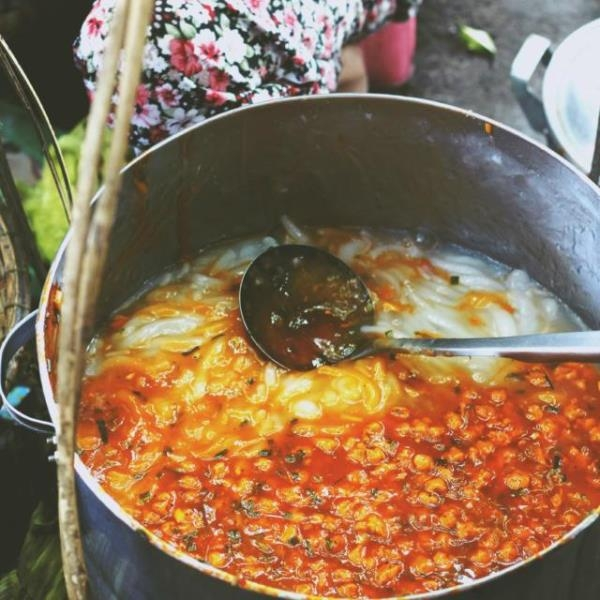
Between two and four in the afternoon, women from Nam Pho village set down their shoulder poles on street corners across Hue and start ladling. Nam Pho thick noodle soup is not a restaurant dish and never really became one: it is a small bowl, sold from a basket, eaten standing up, and gone by early evening. Fewer than a dozen families still carry it into the city. What exactly is in that bowl, and why does the timing matter so much?
A soup you can almost stand a spoon in
The body of the dish comes from a short noodle made of rice flour blended with tapioca starch, pushed through a press directly into boiling water. The starch that escapes never leaves — it thickens the broth into something between a soup and a porridge, cloudy and clinging.
That texture is the whole point. A thin Nam Pho is a failed Nam Pho, and locals will say so.
Rice flour alone would set too firmly and tapioca alone would turn rubbery, so every family guards its own ratio between the two. It is the one measurement nobody shares.
The pink layer on top
Floating over the noodles is a soft orange-pink paste of minced shrimp and pork, seasoned and cooked until it sets in loose curds rather than a solid block. The colour comes from annatto seed oil, not from chilli.
Shrimp is the dominant flavour, and the better vendors still use river shrimp from the lagoon system east of the city rather than farmed stock.
Why the bowl is so small
A serving is barely more than a teacup. This was never designed as a meal — it is an afternoon snack for a city that eats its serious food at breakfast. Ordering two or three bowls is completely normal and no one will be surprised.
The small size also protects the texture. Poured into a large bowl the noodles sit too long, the starch tightens, and the top skins over — which is exactly why vendors refuse to fill a takeaway container generously.
Finding a real gánh
The dish takes its name from Nam Pho, a village downstream of the city on the road toward the lagoon. Vendors who genuinely come from there tend to arrive at the same corner at the same hour every day, sell out, and leave. If a shop offers it at nine in the morning or ten at night, it is a restaurant version.
The other tell is the pot: a real gánh carries the broth over a small charcoal brazier so it stays just below a simmer for hours. Prices are low and portions fixed, so there is little to negotiate.
Regulars know the good corners by sight rather than by name, since almost none of these vendors have a sign or a shopfront to be named after.
How to eat it
Each bowl is finished at the last moment with a spoonful of clear fish sauce and chilli from the vendor's tray. Add it yourself, sparingly, then eat quickly — the noodles keep absorbing broth and the texture stiffens within minutes of being poured.
Chopsticks are optional here; most people use only the flat porcelain spoon, since the noodles are short enough to scoop and the broth is too thick to slurp. Watch which utensil the vendor hands you first.
Fitting it into the afternoon
Nam Pho thick noodle soup slots neatly into the gap between a morning of monuments and an evening on the river. A common Hue afternoon runs from the tombs or Thuy Xuan Incense Village back into town, a bowl on the way, then the river at dusk. If you started the day with a bowl of bun bo, this is its lighter counterweight. Era Tourist times Hue food stops around the vendors' hours rather than restaurant hours — plan the rest with our Hue destination guide, or pair the city with Thuan An on the coast.
Khoảng hai đến bốn giờ chiều, các o gánh từ làng Nam Phổ hạ đôi quang xuống các góc phố Huế và bắt đầu múc. Bánh canh Nam Phổ chưa bao giờ là món của nhà hàng: một tô nhỏ, bán từ gánh, ăn đứng bên đường, và hết trước khi trời tối hẳn. Số gia đình còn gánh vào thành phố chỉ đếm trên đầu ngón tay. Vậy trong tô ấy có gì, và vì sao giờ giấc lại quan trọng đến thế?
Tô bánh canh gần như dựng được đũa
Cái cốt của món nằm ở sợi bánh canh ngắn làm từ bột gạo pha bột lọc, ép thẳng vào nồi nước sôi. Phần bột bung ra không đi đâu cả — nó làm nước dùng sánh lại, lửng giữa canh và cháo, đục và bám đũa.
Chính cái sánh ấy là linh hồn món ăn. Tô Nam Phổ mà loãng là tô hỏng, người Huế nói thẳng như vậy.
Bột gạo không thôi thì đặc cứng, bột lọc không thôi thì dai như cao su, nên mỗi nhà giữ riêng tỷ lệ pha của mình. Đó là con số duy nhất không ai chia sẻ.
Lớp màu hồng phía trên
Nổi trên mặt là lớp nhân tôm thịt quết mịn, màu cam hồng, nấu tới khi kết thành từng mảng mềm chứ không đóng bánh cứng. Màu ấy đến từ dầu hạt điều, không phải từ ớt.
Vị tôm là vị chủ đạo, và những gánh khá vẫn dùng tôm đầm phá phía đông thành phố thay vì tôm nuôi đại trà.
Vì sao tô lại nhỏ đến vậy
Một phần chỉ nhỉnh hơn cái chén trà. Món này vốn không sinh ra để làm bữa chính — nó là món xế của một thành phố ăn no từ sáng sớm. Gọi hai ba tô là chuyện bình thường, không ai ngạc nhiên.
Tô nhỏ cũng là cách giữ kết cấu. Đổ vào tô lớn thì sợi bánh nằm lâu, bột siết lại, mặt tô đóng váng — đó chính là lý do các o không chịu múc đầy hộp mang về.
Tìm đúng gánh
Món mang tên làng Nam Phổ, nằm phía hạ lưu thành phố trên đường về phá. Những o gánh thật sự từ làng ra thường đứng đúng một góc, đúng một giờ mỗi ngày, bán hết rồi về. Chỗ nào mời lúc chín giờ sáng hay mười giờ đêm thì đó là bản nhà hàng.
Dấu hiệu thứ hai là cái nồi: gánh thật đặt nồi trên lò than nhỏ để nước luôn ở dưới ngưỡng sôi suốt buổi. Giá rẻ và phần đã định sẵn nên gần như không có gì để mặc cả.
Khách quen nhớ gánh ngon bằng góc phố chứ không bằng tên, bởi gần như không o nào có bảng hiệu hay mặt tiền để mà đặt tên.
Ăn thế nào cho đúng
Mỗi tô được hoàn thiện ngay lúc bưng bằng một muỗng nước mắm ớt trong trên khay. Bạn tự chan, chan ít thôi, rồi ăn nhanh — sợi bánh vẫn tiếp tục hút nước và tô sẽ đặc lại chỉ sau vài phút.
Ở đây đũa gần như thừa; phần lớn người ăn chỉ dùng muỗng sứ, vì sợi bánh đủ ngắn để múc còn nước thì quá sánh để húp. Cứ nhìn o đưa cho bạn thứ gì trước là biết.
Đặt vào buổi chiều thế nào
Bánh canh Nam Phổ lọt vừa khít khoảng trống giữa buổi sáng di tích và buổi tối trên sông. Một buổi chiều Huế điển hình: từ lăng tẩm hoặc làng hương Thủy Xuân quay về phố, ghé một tô dọc đường, rồi ra sông lúc hoàng hôn. Nếu buổi sáng bạn đã ăn bún bò thì đây là đối trọng nhẹ của nó. Era Tourist canh điểm ăn ở Huế theo giờ của gánh chứ không theo giờ nhà hàng — xem tiếp cẩm nang điểm đến Huế, hoặc ghép thành phố với biển Thuận An.