
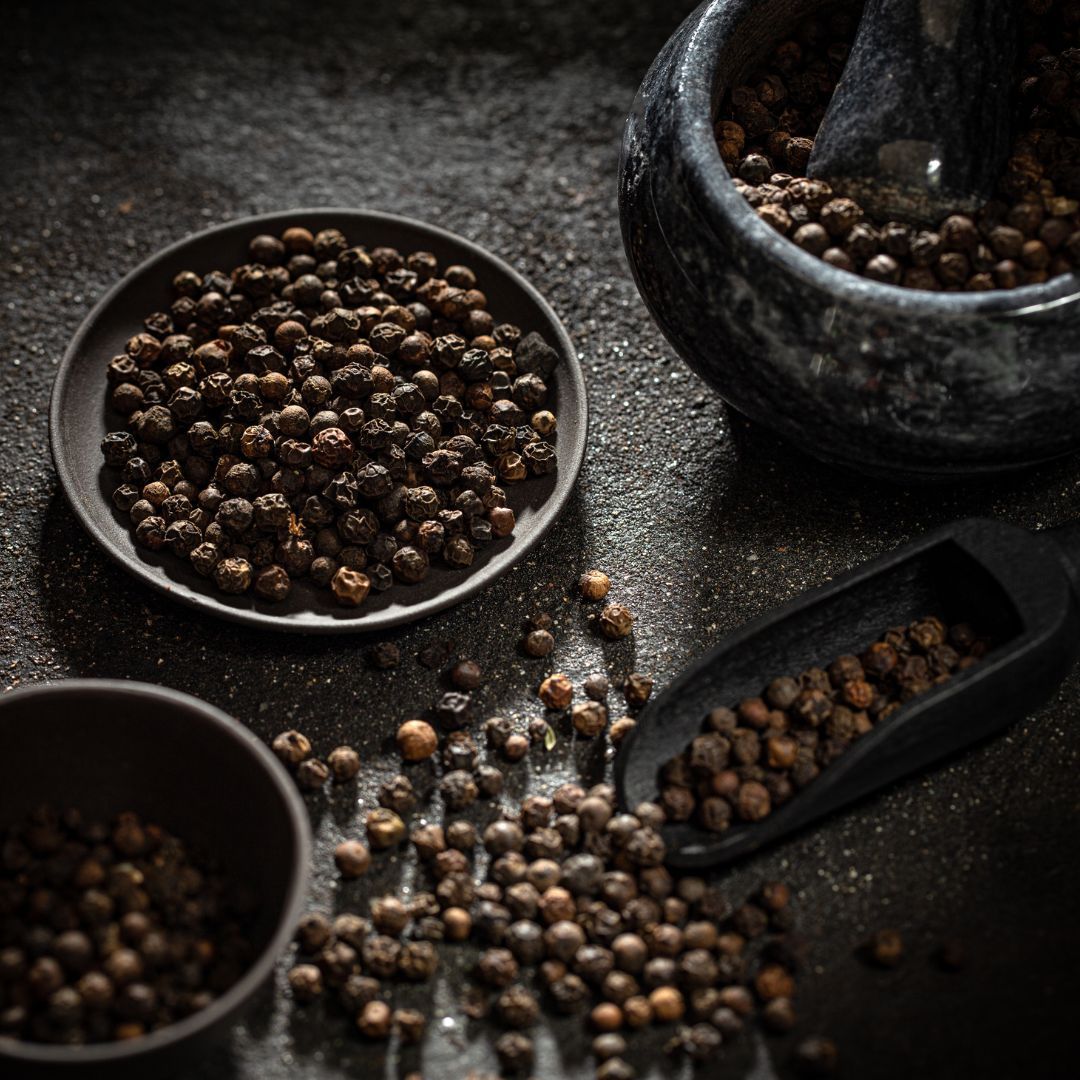
The peppercorns are small, and that is the point. Quang Tri black pepper grows on red basalt soil in the southern half of the province, and it produces a hard, dense corn with a higher concentration of the compounds that make pepper hot and aromatic. Larger, softer peppercorns from elsewhere look more impressive in a jar and taste of considerably less. So what should you buy?
Pepper is a vine and is grown up living support trees or posts, so a pepper garden looks like rows of green columns rather than a field.
Where it grows
Two areas carry the reputation: the district near the old dividing line in the north of the old province, and a red-soil plateau inland from the citadel.
Both sit on weathered basalt, which drains well and holds nutrients, and both have grown pepper on smallholdings rather than plantations for generations.
Harvest falls in the early months of the year, and the freshest crop reaches the stalls shortly afterwards.
Vines take several years to come into full production, so a pepper garden represents a long commitment by the household that planted it.
How to recognise it
Small, uniform, very hard corns with a wrinkled black surface. They should feel heavy in the hand and rattle rather than rustle.
Crush one between your fingers. Good pepper releases scent immediately and the smell stays on the skin; a corn that smells faint has been stored badly or is something else.
This region has grown pepper for export for a very long time, and the trade shaped the districts rather than the other way round.
Black, red and white
Black pepper is picked green and dried whole. Red pepper is left to ripen on the vine and is sweeter and more aromatic. White pepper is ripe fruit with the skin removed and is sharper but less complex.
All three are sold here. Black is the default and the most useful; red is the one worth buying if you already grind your own.
A small bag is enough for a year of home cooking. This is not a spice you need in quantity, and buying less of the best grade is the right call.
Buying it
Buy whole corns rather than ground, and buy from a cooperative or a grower who can name the commune. Ground pepper loses its aroma within weeks.
Treat unusually cheap pepper as the answer to the question. Imported pepper is blended into local sacks and is difficult to detect once ground.
Buy the better grade rather than a larger quantity. Strong pepper lasts longer because you use less of it.
Storing it
Keep it whole, sealed and out of the light, and it holds for a year or more. Grind only what you need.
It travels perfectly and weighs almost nothing, which makes it the most practical gift this province sells.
Where to buy it
Growers in the pepper districts sell direct and it is worth stopping if you are driving between the Vinh Moc Tunnels and the citadel, since the growing areas lie between them. Otherwise the specialist stalls in the city carry it — see Dong Hoi Market. It is the seasoning behind the local fish soup, chao canh ca loc. Era Tourist buys pepper at the grower rather than the market.
Hạt tiêu ở đây nhỏ, và chính chỗ đó mới đáng nói. Hồ tiêu Quảng Trị mọc trên đất đỏ bazan ở nửa phía nam tỉnh, cho ra hạt cứng, đặc, với hàm lượng cao hơn các hợp chất làm nên vị cay và mùi thơm của tiêu. Hạt to hơn, mềm hơn từ nơi khác nhìn trong lọ thì bắt mắt hơn mà ăn thì kém hơn nhiều. Vậy nên mua gì?
Tiêu là dây leo, trồng bám vào cây choái sống hoặc trụ, nên một vườn tiêu trông như những hàng cột xanh chứ không như một cánh đồng.
Trồng ở đâu
Hai vùng mang tiếng: huyện gần giới tuyến cũ ở phía bắc tỉnh cũ, và một vùng đất đỏ trong đất liền phía sau tòa thành.
Cả hai nằm trên nền bazan phong hóa, thoát nước tốt và giữ dưỡng chất, và cả hai đều trồng tiêu trên vườn hộ chứ không phải đồn điền, qua nhiều đời.
Vụ thu rơi vào những tháng đầu năm, và hàng mới nhất ra tới quầy ngay sau đó.
Dây tiêu phải vài năm mới cho thu chính, nên một vườn tiêu là cả một cam kết dài hạn của gia đình đã trồng nó.
Nhận ra bằng cách nào
Hạt nhỏ, đều, rất cứng, mặt ngoài đen và nhăn. Cầm phải thấy nặng tay và đổ ra nghe lạo xạo chứ không xào xạc.
Hãy bóp vỡ một hạt giữa hai ngón tay. Tiêu ngon tỏa mùi ngay và mùi bám lại trên da; hạt nào ngửi thấy nhạt là bảo quản kém hoặc là thứ khác.
Vùng này trồng tiêu để xuất khẩu từ rất lâu, và chính nghề buôn định hình các huyện chứ không phải ngược lại.
Tiêu đen, tiêu đỏ và tiêu trắng
Tiêu đen hái lúc còn xanh rồi phơi nguyên hạt. Tiêu đỏ để chín trên giàn, ngọt hơn và thơm hơn. Tiêu trắng là quả chín đã bóc vỏ, cay gắt hơn nhưng ít tầng vị hơn.
Cả ba đều bán ở đây. Tiêu đen là loại mặc định và hữu dụng nhất; tiêu đỏ đáng mua nếu nhà bạn vốn tự xay lấy.
Một túi nhỏ đủ dùng cả năm cho bếp nhà. Đây không phải thứ gia vị cần mua nhiều, và mua ít hạng ngon nhất mới là lựa chọn đúng.
Mua thế nào
Hãy mua hạt nguyên chứ đừng mua tiêu xay, và mua của hợp tác xã hoặc nhà vườn nói được tên xã. Tiêu xay bay mùi chỉ sau vài tuần.
Tiêu rẻ bất thường chính là câu trả lời cho câu hỏi. Tiêu nhập được trộn vào bao hàng địa phương và rất khó phát hiện một khi đã xay
Hãy mua hạng tốt hơn thay vì mua nhiều hơn. Tiêu đậm dùng được lâu hơn vì mỗi lần chỉ cần ít.
Cất giữ
Để nguyên hạt, đóng kín, tránh ánh sáng thì giữ được một năm hoặc hơn. Cần bao nhiêu xay bấy nhiêu.
Tiêu đi đường hoàn hảo và gần như không nặng, khiến nó thành món quà thực tế nhất mà tỉnh này bán.
Mua ở đâu
Nhà vườn ở các vùng tiêu bán trực tiếp và rất đáng dừng lại nếu bạn đang lái xe giữa địa đạo Vịnh Mốc và thành cổ, vì vùng trồng nằm ngay giữa hai nơi. Còn không thì các quầy đặc sản trong thành phố đều có — xem chợ Đồng Hới. Đây cũng là thứ gia vị đứng sau bát cháo canh cá lóc bản địa. Era Tourist mua tiêu tại nhà vườn chứ không mua ở chợ.