
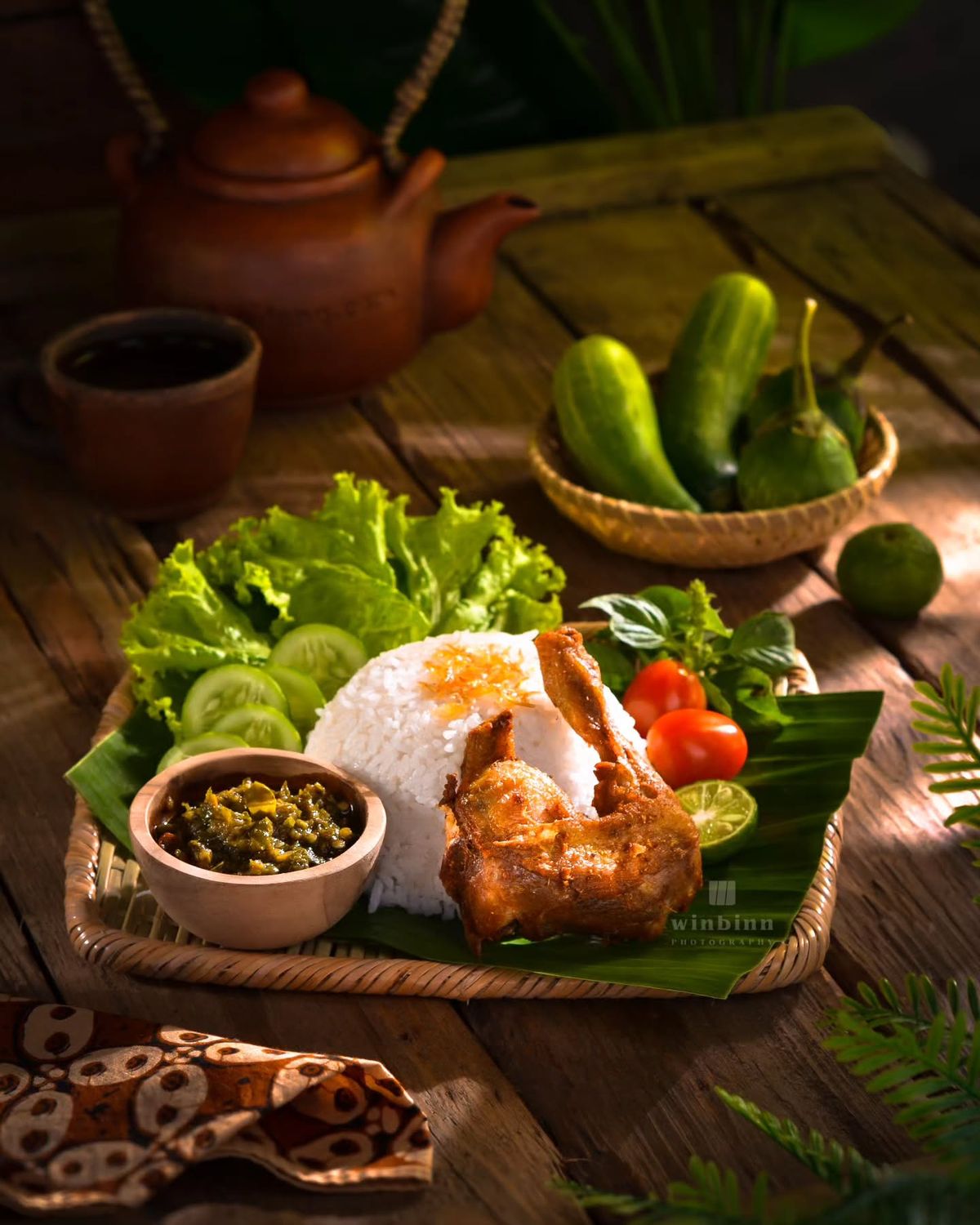
Two things arrive together on the plateau and neither makes sense without the other: a whole chicken split, flattened and grilled slowly over wood coals, and rice steamed inside a length of green bamboo until it takes the scent of the cane. Mang Den grilled chicken and bamboo rice is the standard highland meal across the upland half of Quang Ngai, and it is cooked the way it is because of what the highlands have rather than what a chef decided. So what should you expect?
Order in the afternoon for an evening meal if you can. Most kitchens buy the bird fresh that day rather than holding stock, and a late request often means whatever is left.
The chicken
Free-ranging local birds are used rather than farmed ones. They are smaller, leaner and considerably firmer than what most visitors are used to, and the meat has to be chewed.
The bird is split, pressed flat between bamboo tongs and cooked slowly over embers rather than flame, turned constantly, which is why it takes half an hour or more and cannot be rushed.
Marinades vary but usually involve honey, chilli, salt and the wild pepper used across the central highlands, brushed on repeatedly during cooking.
Charcoal and hardwood are used rather than gas, and the smoke is part of the seasoning. A bird cooked over gas tastes noticeably flatter and locals will say so.
The bamboo rice
Sticky rice is packed into a fresh bamboo tube with a little water, sealed with a leaf and set at the edge of the fire until the outer cane chars and the rice steams inside.
The tube is then split and the rice comes out as a cylinder with a thin membrane of bamboo skin around it, faintly sweet and smelling of the green cane. Peel it back rather than eating it.
Grilled river fish, forest vegetables and boiled young bamboo shoots usually appear alongside, and ordering one or two of them turns the meal into a proper spread.
How it is eaten
The chicken is torn by hand rather than carved, and dipped in salt mixed with chilli and wild pepper. The rice is broken off in pieces.
There is no cutlery ritual here and no plating. Sharing directly from the board is the whole style of the meal, and a table set for one misses the point.
A whole bird feeds three or four. Smaller groups can order half, though most places would rather you took the whole one and carried the rest away.
Where to eat it
Restaurants along the road into the plateau and around the town all cook it, and many will prepare it to order, which is why it needs to be arranged in advance rather than ordered on arrival.
Call ahead if you can. A bird cooked properly over embers takes time, and a rushed one arrives dry.
Eat outdoors if the weather allows. The cold evening air is the reason this food developed the way it did, and it tastes different indoors under a fan.
What to drink with it
Rice wine is the traditional accompaniment, sometimes served from a communal jar with reed straws in the ethnic minority tradition of the region.
Treat that jar as a social ritual rather than a drinking game. If it is offered, the pace is set by the host, and it is polite to follow it.
Where it fits in the trip
This is the evening meal on the plateau — see Mang Den for what to do with the days around it. For the other highland dish worth planning around, see goi la Kon Tum, and for what to bring home from up here, see Kon Tum highland coffee. Era Tourist arranges the bird before arrival so nobody sits waiting an hour after a long climb — see the highland destination guide.
Hai thứ được bưng ra cùng nhau trên cao nguyên và thiếu bên nào thì bên kia cũng vô nghĩa: một con gà mổ banh, ép dẹp, nướng chậm trên than củi, và gạo hấp trong ống nứa tươi cho tới khi ngậm mùi cây. Gà nướng Măng Đen và cơm lam là bữa ăn vùng cao chuẩn mực khắp nửa miền núi của Quảng Ngãi, và nó được nấu như vậy vì thứ vùng cao sẵn có chứ không vì một đầu bếp nào quyết định. Vậy nên trông đợi điều gì?
Nếu được thì hãy đặt từ buổi chiều cho bữa tối. Phần lớn bếp mua gà tươi trong ngày chứ không trữ sẵn, và gọi muộn thường có nghĩa là nhận phần còn lại.
Con gà
Người ta dùng gà thả vườn bản địa chứ không phải gà nuôi công nghiệp. Gà nhỏ hơn, ít mỡ hơn và chắc thịt hơn hẳn thứ phần lớn khách quen ăn, và thịt phải nhai.
Gà được mổ banh, kẹp ép dẹp giữa hai thanh tre và nướng chậm trên than hồng chứ không trên lửa ngọn, trở liên tục, nên mất nửa tiếng hoặc hơn và không thể vội.
Ướp mỗi nơi một kiểu nhưng thường có mật ong, ớt, muối và thứ hạt tiêu rừng dùng khắp Tây Nguyên, phết đi phết lại trong lúc nướng.
Người ta dùng than và củi chứ không dùng bếp gas, và làn khói là một phần của gia vị. Gà nướng bếp gas ăn nhạt hơn thấy rõ, và dân bản địa sẽ nói thẳng điều đó.
Ống cơm lam
Gạo nếp được nhồi vào ống nứa tươi cùng chút nước, bịt lá rồi dựng ở rìa bếp lửa tới khi vỏ ống cháy sém và gạo chín bằng hơi bên trong.
Sau đó ống được chẻ ra, cơm hiện thành một khối trụ có lớp màng nứa mỏng bọc quanh, ngọt thoảng và thơm mùi cây tươi. Hãy bóc lớp màng ấy ra chứ đừng ăn.
Cá suối nướng, rau rừng và măng luộc thường được dọn kèm, và gọi thêm một hai món ấy là bữa ăn thành mâm đúng nghĩa.
Ăn thế nào
Gà xé tay chứ không lóc dao, chấm muối trộn ớt và tiêu rừng. Cơm lam bẻ thành từng khúc.
Ở đây không có nghi thức dao dĩa và cũng không bày biện. Chia nhau ngay trên tấm lá là toàn bộ phong cách của bữa ăn, và một bàn dọn cho một người là đã trượt mất ý nghĩa.
Một con gà đủ cho ba bốn người. Nhóm nhỏ có thể gọi nửa con, dù phần lớn quán vẫn muốn bạn lấy nguyên con rồi gói phần còn lại mang về.
Ăn ở đâu
Các quán dọc đường lên cao nguyên và quanh thị trấn đều làm món này, và nhiều nơi nướng theo đơn đặt, nên cần hẹn trước chứ không phải tới nơi mới gọi.
Gọi trước nếu có thể. Một con gà nướng đúng cách trên than cần thời gian, còn con nướng vội thì bưng ra khô
Nếu thời tiết cho phép thì hãy ăn ngoài trời. Chính cái lạnh của buổi tối vùng cao đã định hình món ăn này, và ngồi trong nhà dưới quạt thì vị khác hẳn.
Uống gì kèm
Rượu cần là thứ đi kèm theo truyền thống, có nơi dọn nguyên ché với những cần trúc theo lối của các cộng đồng bản địa trong vùng.
Hãy xem ché rượu ấy là một nghi thức giao tiếp chứ không phải một cuộc thi uống. Nếu được mời, nhịp do chủ nhà đặt, và theo nhịp ấy mới là phải phép.
Chỗ của nó trong chuyến đi
Đây là bữa tối trên cao nguyên — xem Măng Đen để biết ngày quanh nó làm gì. Món vùng cao còn lại đáng canh lịch là gỏi lá Kon Tum, còn thứ mang về từ trên này thì xem cà phê Kon Tum. Era Tourist đặt gà từ trước khi đoàn tới để không ai phải ngồi chờ một tiếng sau quãng leo dài — xem cẩm nang điểm đến vùng cao.