
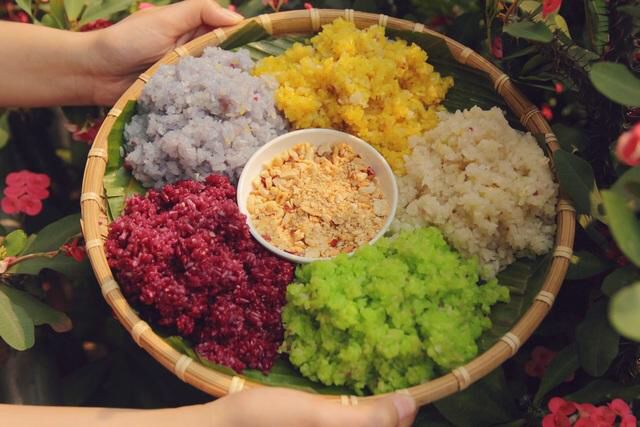
A beautiful and symbolic festive dish, five-coloured sticky rice is the rainbow of the highlands, glutinous rice steamed in five natural colours from forest leaves, roots and flowers for celebrations and holidays. Fragrant, tender and beautifully vivid in red, purple, yellow, green and white, this cheerful dish carries deep cultural meaning for the ethnic communities of Lai Chau and is a highlight of every festive table. It is a dish in which colour, fragrance and tradition come together beautifully. So what exactly makes five-coloured sticky rice such a treasured and distinctive local speciality?
A festive highland tradition
Five-coloured sticky rice is a cherished festive dish among the ethnic communities of the northwest, prepared especially for Tet, weddings, ancestral offerings and important celebrations throughout the highland year.
Its presence marks an occasion as special, and it is precisely this deep connection to festivals and celebration, and the care taken in its preparation, that gives five-coloured sticky rice its meaningful and honoured place in Lai Chau.
Five natural colours
The dish takes its name and its beauty from its five vivid colours, red, purple, yellow, green and white, each produced entirely from natural dyes made from various forest leaves, roots and flowers gathered locally.
This entirely natural use of colouring is genuinely central to the dish, at once beautiful to look at and completely free of anything artificial, and it is precisely this skilful, patient and time-honoured colouring drawn straight from the forest that gives five-coloured sticky rice its wonderfully striking, vivid and cheerful appearance.
Symbolic meaning in every hue
The five colours are not merely decorative but carry symbolic meaning, often associated with the elements, with prosperity, and with wishes for good fortune, reflecting the beliefs and values of the highland communities.
This rich layer of symbolism gives the dish real and lasting cultural depth well beyond its obvious surface beauty, and taking the time to understand the meaning behind each of the colours adds greatly to a fuller appreciation of what five-coloured sticky rice truly represents when it appears at a festive highland table.
Fragrant and tender
Beyond its striking looks, the dish is prepared from prized local glutinous rice, steamed slowly in the traditional way so that each colour of rice emerges fragrant, glossy and beautifully tender to eat.
This lovely natural fragrance and wonderfully soft, tender texture together make the dish every bit as pleasurable to actually eat as it is beautiful to behold on the table, and it is precisely this happy combination of striking beauty and genuine eating quality that ensures five-coloured sticky rice is truly treasured and not merely admired from afar.
How and where to enjoy it
The dish is enjoyed on its own simply to savour its natural fragrance and vivid colour, or else served generously alongside smoky grilled meats and other traditional highland dishes as a beautiful and celebratory centrepiece of a shared festive or family gathering.
Visitors can find five-coloured sticky rice at markets, festivals and homestays around Lai Chau, especially during the holidays, where it offers a genuinely beautiful and authentic taste of highland celebration.
Why it belongs on your list
Colourful, fragrant and genuinely rich in deep cultural meaning, five-coloured sticky rice is a small but genuine and evocative emblem of the festive traditions and the natural, forest-based resourcefulness of the highland communities of the whole of Lai Chau.
For any traveller at all who is keen to experience the real beauty of highland celebration, seeking out and savouring an authentic plate of five-coloured sticky rice is among the most rewarding, beautiful and evocative culinary experiences that the whole province has to offer its visitors.
Era Tourist's arrangement: we suggest enjoying a plate of beautiful, fragrant five-coloured sticky rice as part of a proper festive highland meal using our Lai Chau travel guide, ideally served generously alongside the region's famous smoky buffalo thit trau gac bep for a genuinely authentic, memorable and colourful upland feast.
Một món ngày lễ đẹp đẽ và mang tính biểu tượng, xôi ngũ sắc là cầu vồng của vùng cao, gạo nếp được đồ thành năm màu tự nhiên từ lá rừng, rễ cây và hoa cho các dịp lễ tết. Thơm, dẻo và rực rỡ tuyệt đẹp trong sắc đỏ, tím, vàng, xanh và trắng, món ăn tươi vui này mang ý nghĩa văn hóa sâu sắc với các cộng đồng dân tộc của Lai Châu và là điểm sáng của mọi mâm cỗ ngày lễ. Đó là món mà màu sắc, hương thơm và truyền thống hòa quyện tuyệt đẹp. Vậy điều gì khiến xôi ngũ sắc thành một đặc sản được trân quý và đặc trưng đến vậy?
Một truyền thống ngày lễ vùng cao
Xôi ngũ sắc là một món ngày lễ được trân quý trong các cộng đồng dân tộc Tây Bắc, được làm đặc biệt cho Tết, cưới hỏi, mâm cúng tổ tiên và các dịp lễ trọng đại suốt cả năm của vùng cao.
Sự hiện diện của nó đánh dấu một dịp là đặc biệt, và chính mối liên hệ sâu xa với lễ hội và các dịp lễ ấy, cùng sự chăm chút trong chế biến, mang cho xôi ngũ sắc vị trí ý nghĩa và được trân trọng ở Lai Châu.
Năm màu tự nhiên
Món ăn lấy tên và vẻ đẹp từ năm màu rực rỡ, đỏ, tím, vàng, xanh và trắng, mỗi màu được tạo hoàn toàn từ phẩm màu tự nhiên làm từ nhiều loại lá rừng, rễ cây và hoa hái tại địa phương.
Việc dùng phẩm màu tự nhiên ấy cốt yếu với món ăn, vừa đẹp vừa không có gì nhân tạo, và chính cách nhuộm màu khéo léo, truyền thống từ rừng ấy mang cho xôi ngũ sắc vẻ ngoài ấn tượng và tươi vui.
Ý nghĩa biểu tượng trong từng sắc
Năm màu không chỉ để trang trí mà mang ý nghĩa biểu tượng, thường gắn với các yếu tố, với sự thịnh vượng và với những lời chúc may mắn, phản ánh niềm tin và giá trị của các cộng đồng vùng cao.
Tầng biểu tượng ấy mang cho món ăn chiều sâu văn hóa thật sự ngoài vẻ đẹp, và hiểu ý nghĩa đằng sau các màu thêm rất nhiều cho sự trân trọng điều xôi ngũ sắc thực sự đại diện trên một mâm cỗ ngày lễ.
Thơm và dẻo
Ngoài vẻ ngoài ấn tượng, món ăn được làm từ gạo nếp địa phương quý, đồ chậm theo lối truyền thống để mỗi màu xôi thành phẩm thơm, bóng và dẻo mềm tuyệt đẹp khi ăn.
Hương thơm đáng yêu và kết cấu mềm ấy khiến món ăn ngon miệng như đẹp mắt, và chính sự kết hợp giữa vẻ đẹp và chất lượng thực sự ấy đảm bảo xôi ngũ sắc được trân quý chứ không chỉ được ngắm nhìn.
Thưởng thức thế nào và ở đâu
Món ăn được thưởng thức riêng để cảm hương thơm và màu sắc, hoặc dọn cùng thịt nướng và các món vùng cao khác như một món trung tâm đẹp đẽ, mang không khí lễ hội của một bữa cơm gia đình hay ngày lễ chung.
Du khách có thể tìm xôi ngũ sắc ở chợ, lễ hội và homestay quanh Lai Châu, đặc biệt trong dịp lễ, nơi nó mang đến một hương vị thực sự đẹp đẽ và chính hiệu của dịp lễ vùng cao.
Vì sao nên có trong danh sách
Nhiều màu, thơm và giàu ý nghĩa văn hóa, xôi ngũ sắc là một biểu tượng nhỏ mà thật sự về những truyền thống ngày lễ và sự tháo vát tự nhiên của các cộng đồng vùng cao Lai Châu.
Với bất kỳ du khách nào muốn trải nghiệm vẻ đẹp của dịp lễ vùng cao, tìm xôi ngũ sắc chính hiệu nằm trong số những trải nghiệm ẩm thực đáng giá và gợi cảm nhất mà cả tỉnh có thể trao tặng.
Gợi ý sắp xếp của Era Tourist: chúng tôi gợi ý thưởng xôi ngũ sắc đẹp đẽ như một phần của bữa cơm vùng cao ngày lễ theo cẩm nang du lịch Lai Châu, lý tưởng nhất là dọn cùng thịt trâu gác bếp đậm khói cho một bữa tiệc vùng cao đích thực và nhiều màu sắc.