
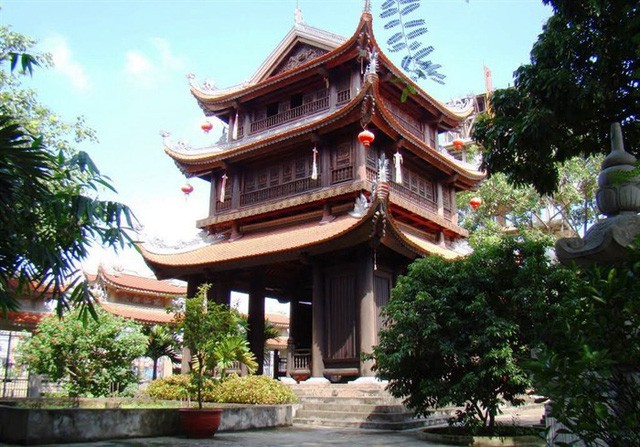
One of the most magnificent temples in all of northern Vietnam, Keo Pagoda in the former Thai Binh, now part of Hung Yen following the recent reorganisation, is a true masterpiece of traditional wooden architecture. Celebrated above all for its extraordinary bell tower, built entirely of wood without a single nail, this vast and beautifully preserved complex has stood for centuries as a landmark of faith and craftsmanship. It is a place where the genius of old Vietnamese carpentry reaches its very height. So what exactly makes Keo Pagoda such a rewarding and awe-inspiring destination to visit?
A great temple of the delta
Keo Pagoda is genuinely one of the largest and most celebrated ancient temples in the whole northern delta, a truly vast complex of grand halls, ceremonial gates and open courtyards that has been very carefully preserved across many long centuries in the former Thai Binh, now part of the enlarged Hung Yen.
Its impressive scale, great age and remarkable state of preservation together give the pagoda an exceptional importance, and it is precisely this rare combination of grandeur and antiquity that makes Keo Pagoda one of the truly essential and unmissable cultural landmarks of the whole region today.
The famous wooden bell tower
The pagoda's single most celebrated and photographed feature is undoubtedly its magnificent three-storey wooden bell tower, an elegant and gracefully soaring structure that is very widely admired as a genuine masterpiece of traditional Vietnamese carpentry and precise joinery.
Remarkably, the entire tower is said to have been constructed purely from interlocking pieces of wood without the use of a single nail, and it is precisely this astonishing and much-celebrated feat of craftsmanship that has made the bell tower of Keo Pagoda so justly famous throughout the whole country.
Centuries of history and legend
The pagoda has a long and storied history stretching back many centuries, and it is associated with a revered monk of legend whose life and deeds are woven into the traditions and worship of the temple.
This deep historical and spiritual background gives the complex a powerful sense of continuity, and understanding the legends connected to it adds real depth to a visit, helping Keo Pagoda feel alive with story as well as architecture.
Vast halls and beautiful grounds
Beyond the famous tower, the pagoda unfolds through a series of grand worship halls, ceremonial gates and spacious courtyards, all built in traditional style and arranged along a harmonious central axis.
The sheer scale and beauty of the complex reward unhurried exploration on foot, and moving slowly through its successive spaces gives a vivid sense of the ambition and devotion that went into creating Keo Pagoda over the centuries.
A living centre of festival and faith
The pagoda remains an active place of worship and is famous for its major traditional festival, a lively celebration featuring processions, folk games and rituals that draws huge crowds from across the region each year.
Experiencing the pagoda during its renowned festival reveals it as a vibrant living tradition rather than a mere monument, and this continuing devotion is a key part of what makes Keo Pagoda so much more than simply a beautiful old building.
Why it belongs on your itinerary
Magnificent, ancient and architecturally extraordinary, Keo Pagoda offers a rare and awe-inspiring encounter with the very finest of traditional Vietnamese wooden architecture and centuries of living faith.
For any traveller with an interest in architecture, history or spirituality, a visit to Keo Pagoda is among the most rewarding and unforgettable experiences that the former Thai Binh brings to the enlarged province of Hung Yen.
Era Tourist's arrangement: we suggest making the magnificent Keo Pagoda the centrepiece of a full day exploring the former Thai Binh area using our Hung Yen travel guide, ideally combined with a refreshing and restful trip out to the nearby wild stretch of coast at Con Vanh Beach, for a rewarding day that balances grand culture with peaceful coastal nature.
Một trong những ngôi chùa lộng lẫy nhất cả miền Bắc Việt Nam, chùa Keo thuộc Thái Bình cũ, nay thuộc Hưng Yên sau đợt sắp xếp lại gần đây, là một kiệt tác đích thực của kiến trúc gỗ truyền thống. Được ngợi ca trên hết bởi gác chuông phi thường, dựng hoàn toàn bằng gỗ không một chiếc đinh, quần thể rộng lớn và được bảo tồn tuyệt đẹp này đã đứng vững hàng thế kỷ như một mốc son của đức tin và tay nghề. Đó là nơi thiên tài của nghề mộc Việt xưa đạt tới đỉnh cao. Vậy điều gì khiến chùa Keo thành một điểm đến đáng giá và choáng ngợp để viếng thăm?
Một ngôi chùa lớn của vùng đồng bằng
Chùa Keo là một trong những ngôi chùa cổ lớn nhất và được ngợi ca nhất vùng đồng bằng phía Bắc, một quần thể rộng lớn gồm các gian điện, cổng và sân được bảo tồn cẩn thận qua nhiều thế kỷ ở Thái Bình cũ, nay thuộc Hưng Yên mở rộng.
Quy mô, tuổi tác và tình trạng bảo tồn đáng nể mang cho ngôi chùa một tầm quan trọng hiếm có, và chính sự kết hợp giữa sự bề thế và cổ kính ấy khiến chùa Keo thành một trong những mốc son văn hóa thực sự cốt yếu của cả vùng.
Gác chuông bằng gỗ trứ danh
Nét được ngợi ca nhất của chùa là gác chuông ba tầng bằng gỗ lộng lẫy, một công trình thanh thoát, vươn cao được ngưỡng mộ rộng rãi như một kiệt tác của nghề mộc và ghép gỗ truyền thống Việt Nam.
Đáng kinh ngạc, gác chuông được kể là đã được dựng hoàn toàn từ gỗ ghép mộng mà không dùng đinh, và chính kỳ công tay nghề đáng kinh ngạc ấy đã khiến gác chuông chùa Keo nổi tiếng khắp cả nước.
Hàng thế kỷ lịch sử và huyền thoại
Ngôi chùa có một lịch sử dài và giàu chuyện kể trải dài nhiều thế kỷ, và gắn với một vị thiền sư được tôn kính trong huyền thoại mà cuộc đời và hành trạng đan vào các truyền thống và việc thờ tự của chùa.
Phông nền lịch sử và tâm linh sâu dày ấy mang cho quần thể một cảm giác mạnh mẽ về sự tiếp nối, và hiểu những huyền thoại gắn với nó thêm chiều sâu thật sự cho chuyến thăm, giúp chùa Keo sống động với câu chuyện cũng như với kiến trúc.
Những gian điện rộng lớn và khuôn viên đẹp đẽ
Ngoài gác chuông trứ danh, ngôi chùa trải ra qua một loạt gian thờ bề thế, cổng nghi lễ và những khoảng sân rộng, tất cả được dựng theo lối truyền thống và bố trí dọc một trục trung tâm hài hòa.
Chính quy mô và vẻ đẹp của quần thể tưởng thưởng cho sự khám phá thong thả bằng chân, và đi chậm qua những không gian nối tiếp của nó mang đến một cảm nhận sống động về sự khát vọng và lòng thành đã tạo nên chùa Keo qua các thế kỷ.
Một trung tâm sống động của lễ hội và đức tin
Ngôi chùa vẫn là một nơi thờ tự sống động và nổi tiếng với lễ hội truyền thống lớn của nó, một lễ hội sôi động với các đám rước, trò chơi dân gian và nghi lễ thu hút đám đông khổng lồ từ khắp vùng mỗi năm.
Trải nghiệm ngôi chùa vào dịp lễ hội trứ danh cho thấy nó là một truyền thống sống động sôi nổi chứ không phải một di tích đơn thuần, và lòng thành tiếp nối ấy là một phần cốt yếu khiến chùa Keo còn hơn nhiều một công trình cổ đẹp đẽ.
Vì sao nên có trong lịch trình
Lộng lẫy, cổ kính và phi thường về kiến trúc, chùa Keo mang đến một cuộc gặp hiếm có và choáng ngợp với tinh hoa nhất của kiến trúc gỗ truyền thống Việt Nam và hàng thế kỷ đức tin đang sống.
Với bất kỳ du khách nào quan tâm đến kiến trúc, lịch sử hay tâm linh, một chuyến viếng chùa Keo nằm trong số những trải nghiệm đáng giá và khó quên nhất mà Thái Bình cũ mang đến cho tỉnh Hưng Yên mở rộng.
Gợi ý sắp xếp của Era Tourist: chúng tôi gợi ý lấy chùa Keo làm trung tâm của một ngày khám phá vùng Thái Bình cũ theo cẩm nang du lịch Hưng Yên, lý tưởng nhất là kết hợp một chuyến ra biển gần đó tại biển Cồn Vành tươi mát.